Compartment 11 is the northwestern one of four parcels (commonly called "lozenges") bordered by the former runway and taxiways. The lozenges form four similarly sized, long linear sections, all of which are very rich in flora, containing national and Berkshire rarities.
General description and evaluation of ecology
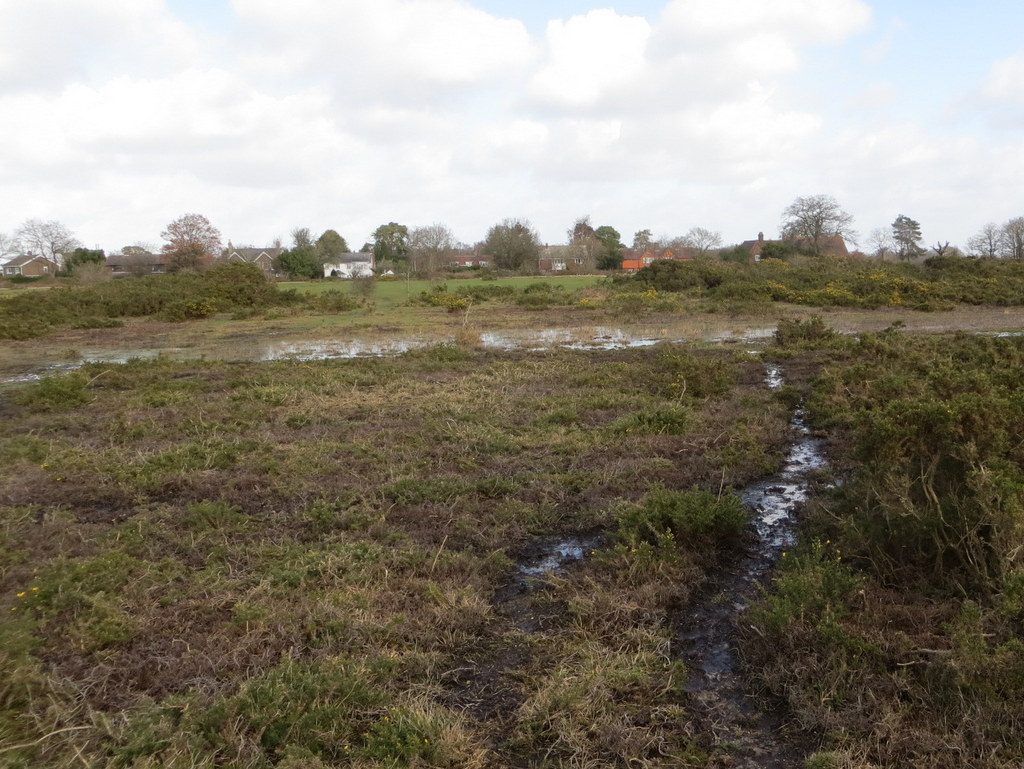
Neutral grassland occurs as long strips bordering the south and north edges of the lozenge, much broader on the north side. The south side grassland contains upright chickweed, a nationally scarce species. On the north side, bird's-foot trefoil, oxeye daisy and common knapweed, along with hawthorn and dog rose in patches and as single specimens, can be found. The compartment is prone to waterlogging, with many ephemeral pools in winter.
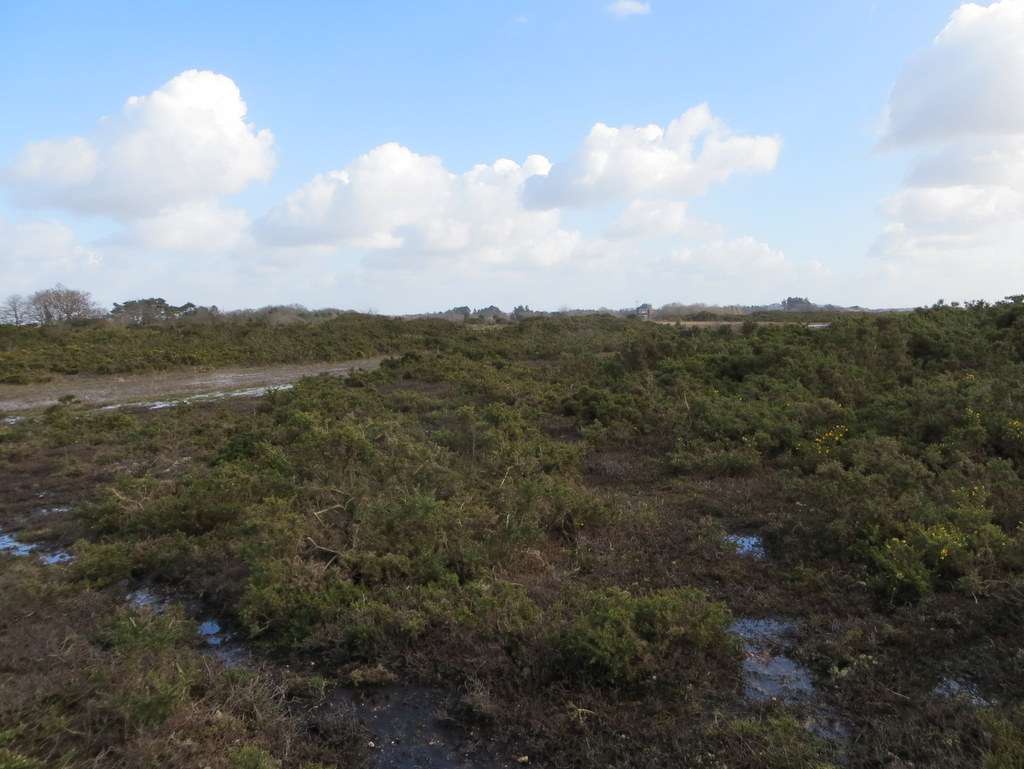
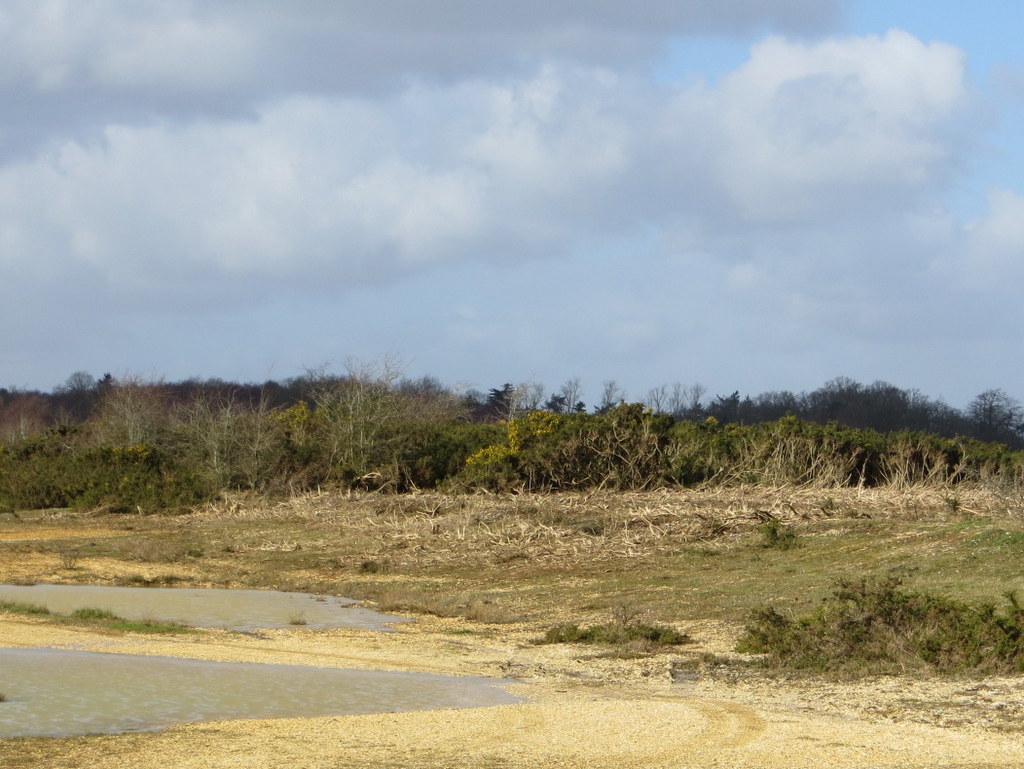
There are extensive gorse areas surrounding the heathland, which have been mown to diversify the structure and encourage heather regeneration. Lichen heath also occurs sparingly and the centre of the compartment has multiple damp acidic flushes which slowly run west to east towards a drain, a remnant of the airbase. The dry heath and acid grassland mosaic supports heather, dwarf gorse, pill sedge, heath bedstraw, tormentil and heath milkwort with sneezewort and slender St. John's wort occurring in localised areas. Some areas are of degenerate or over-dominant gorse are periodically cut back to encourage heather growth and to diversify structure.
Livestock play a role in poaching the ground, especially in the central wet areas where open ground and temporary pools occur. This wet strip is a rich variety of marshy grassland and wet acid flush with species including heath dog violet, devil's-bit scabious, lesser spearwort, heath grass, oval sedge and various rushes. There are also less common plants including yellow sedge, common sedge, pale sedge, creeping willow and mat grass, all with restricted distribution in the UK.
BAP habitats
- Lowland heathland
- Lowland dry acid grassland
- Lowland meadow
Higher Level Stewardship
Options exist for this compartment.
- HO1 (maintenance of lowland heathland)
- HK6 (maintenance of species-rich, semi-natural grassland)
- HR2 (supplement for native breeds at risk)
Overall management objectives
The overall objectives are to reduce the extent of gorse in favour of heathland and acid grassland, and to increase the structural diversity of both heather and gorse.
Compartment 11 (20.6 ha)
| Objective | Area | Method | Comment |
|---|---|---|---|
| 11.1) Maintain and where possible, expand the areas of existing heathland, acid and neutral grassland mosaic into areas dominated by gorse or species-poor grassland. | Across compartment. | Sections of older degenerate gorse cut and collected each year as laid out in the Gorse Management Plan.
Suitable areas of gorse can be cut, the arisings removed and the ground scraped to remove litter. Allow to re-generate naturally. Species-poor areas can have very small scrapes made within them to create bare gravel areas. Control ragwort. |
Refer to Gorse Management Plan (WBC 2012). |
11.2) Diversify heathland structure.
HLS objectives |
Whole compartment. | Coppice dominant and degenerate gorse and dominant scrub. Treat stumps to prevent re-growth where extent of gorse is to be reduced or scrape litter layer to expose bare ground. Cut scattered small areas rather than large swathes. Retain occasional larger single birch trees.
Retain some taller gorse and (mainly hawthorn) scrub above the bank on the southern compartment edge, as a screen against prevailing southwesterly winds. Keep the south-facing bank itself clear to maximise sunlight. |
Refer to Gorse Management Plan (WBC 2012).
Gorse management for Dartford warbler. |