Compartment 12 is the southwestern one of four parcels (commonly called "lozenges") bordered by the former runway and taxiways. The lozenges form four similarly sized, long linear sections, all of which are very rich in flora, containing national and Berkshire rarities.
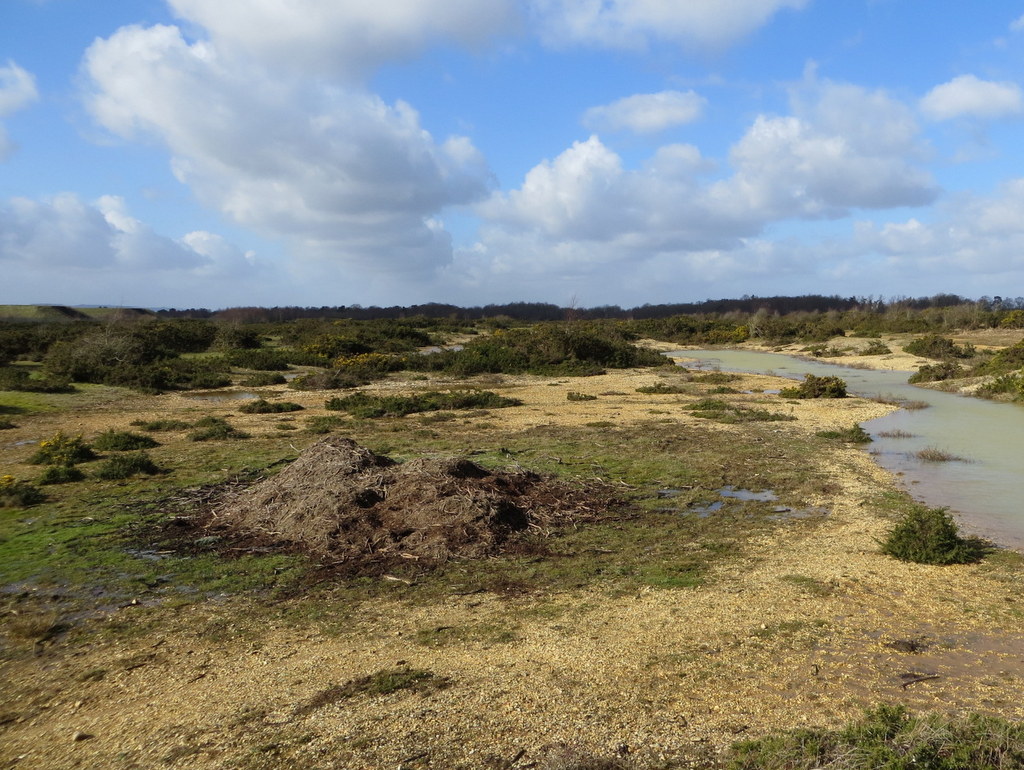
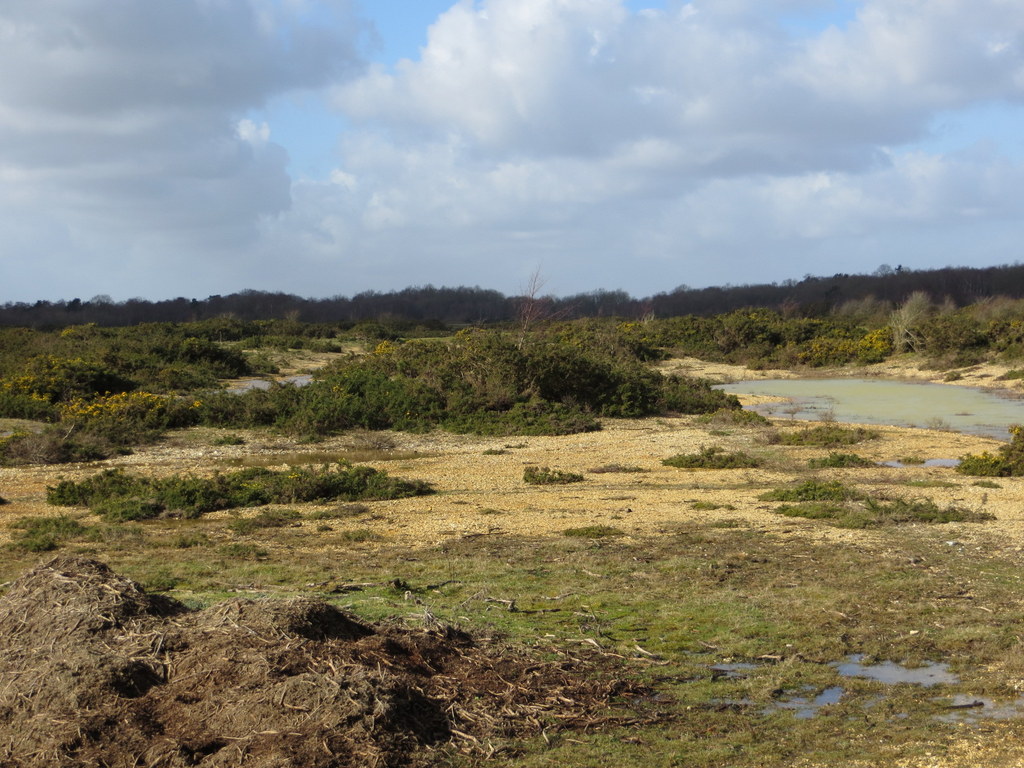
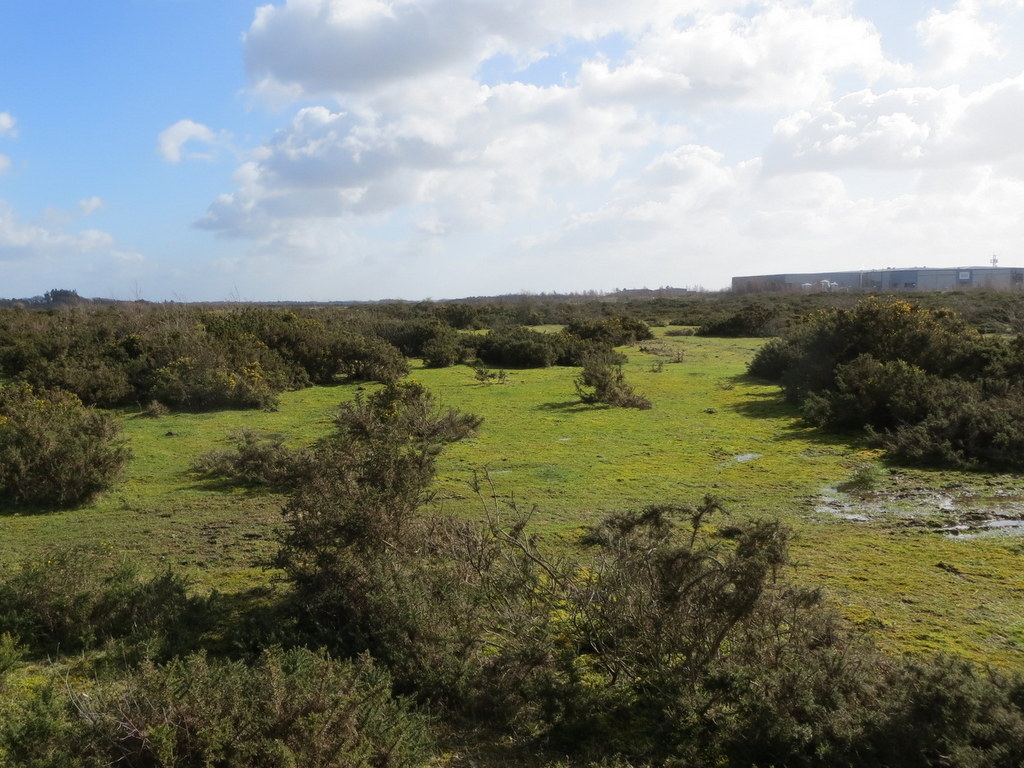
The compartment dips gently from north to south and, like compartment 11, has distinct bands of vegetation conforming to the topography, also containing extensive areas of gorse, heath and acid and neutral grassland. The total area of this compartment is 19.6 ha.
General description and evaluation of ecology
Neutral grassland occurs as narrow strips predominantly bordering the south side of the compartment and reveals green-winged orchid and autumn ladies tresses, both uncommon in Berkshire, as well as early purple orchid.
The dry heathland is a complex mixture of heather, dwarf gorse and gorse, the latter of which forms dense areas where Dartford warbler reside most of the year. Lichen heath is rare in this compartment. In isolated areas along the middle of the compartment, wet flushes reveal areas where heath grass, oval sedge, soft rush and hard rush can be found. One flush area has common rush, lesser spearwort and compact rush. This area is also frequently used by roosting jack snipe.
The band of acid grassland on the southern border contains 3 linear zones of heather in patches, likely corresponding to minor soil changes. There are patches of dense gorse scrub and a few small flushes containing hard rush, heath grass and carnation sedge, and parts are rich in fungi.
BAP habitats
- Lowland heathland
- Lowland dry acid grassland
- Lowland meadow
Higher Level Stewardship
Options exist for this compartment.
- HO1 (maintenance of lowland heathland)
- HK6 (maintenance of species-rich, semi-natural grassland)
- HR2 (supplement for native breeds at risk)
Overall management objectives
The overall objectives are to reduce the extent of gorse in favour of heathland and acid grassland, and to manage both heathland and gorse areas to diversify structure. There is also an objective to encourage patches of kidney vetch adjacent to the bund on the business park, for the benefit of small blue butterflies.
Compartment 12 (19.6 ha)
| Objective | Area | Method | Comment |
|---|---|---|---|
| 12.1) Maintain and where possible, expand the areas of existing heathland, acid and neutral grassland mosaic into areas dominated by gorse or species-poor grassland. | Across compartment. |
Sections of older degenerate gorse cut and collected each year as laid out in the Gorse Management Plan.
Suitable areas of gorse can be cut, the arisings removed and the ground scraped to remove litter. Allow to re-generate naturally. Species-poor areas can have very small scrapes made within them to create bare gravel areas. Control ragwort. |
Refer to Gorse Management Plan (WBC 2012).
Clear gorse in southeast corner of compartment, to encourage spread of kidney vetch which is common along the bund next to New Greenham Park. |
12.2) Diversify heathland structure.HLS objectives |
Whole compartment. | Coppice dominant or degenerate gorse and dominant scrub. Treat stumps to prevent re-growth where extent of gorse is to be reduced or scrape litter layer to expose bare ground. |
Refer to Gorse Management Plan (WBC 2012).
Gorse management for Dartford warbler. Retain scrub screen around wet flushes and along compartment edges. |